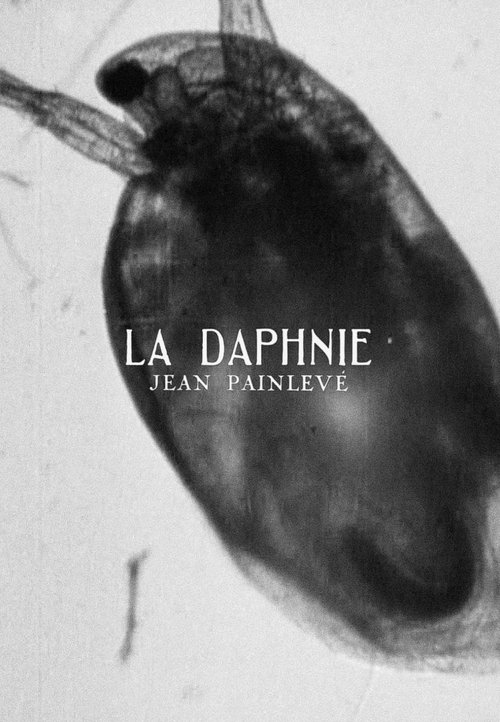
Titles in French and English help us know what we're seeing. In all waters, daphnia abound. They are crustaceans about 2 ml long, with one eye that turns in all directions. Antennae enable daphnia to move: in a close up magnified 150,000 times, we see the muscles of the antennae pulse. We see the eye, the nerve mass, blood globules, and the heart, beating several times per second. The intestine forms a long line. All are females; eggs develop above the intestine. New generations come rapidly. Inside each daphnia are tiny infusoria; we watch them clean the intestine of a dead daphnia. An enemy, the hydra, approaches. A daphnia dies, but many remain.
Directed by Jean Painlevé
Your score–
Not scoredImages
Related

The Summers of It - Chapter Two: It Ends

Naqoyqatsi

Come See Me in the Good Light

The U.S. vs. John Lennon

To Kill a Tiger

Woman

Avatar: Creating the World of Pandora

Capital in the Twenty-First Century

Marvel Studios Assembled: The Making of Hawkeye

David Byrne's American Utopia

Love, Marilyn

Don't F*#% With John Wick

The Assassination of Jesse James: Death of an Outlaw

Ex Libris: The New York Public Library

Marina Abramović: The Artist Is Present

Directed by John Ford